
Our lives are digital, and cybersecurity is how we protect everything online, from your computer and data to large networks against digital attacks. These attacks can steal your information, damage systems, or stop things from working.
In 2026, understanding cybersecurity is vital for everyone. This guide will cover the basic things you need to know, the dangers businesses face, and the simple, effective ways you can keep your personal information safe in a connected world.
How Cybersecurity Differs from Traditional Security Methods
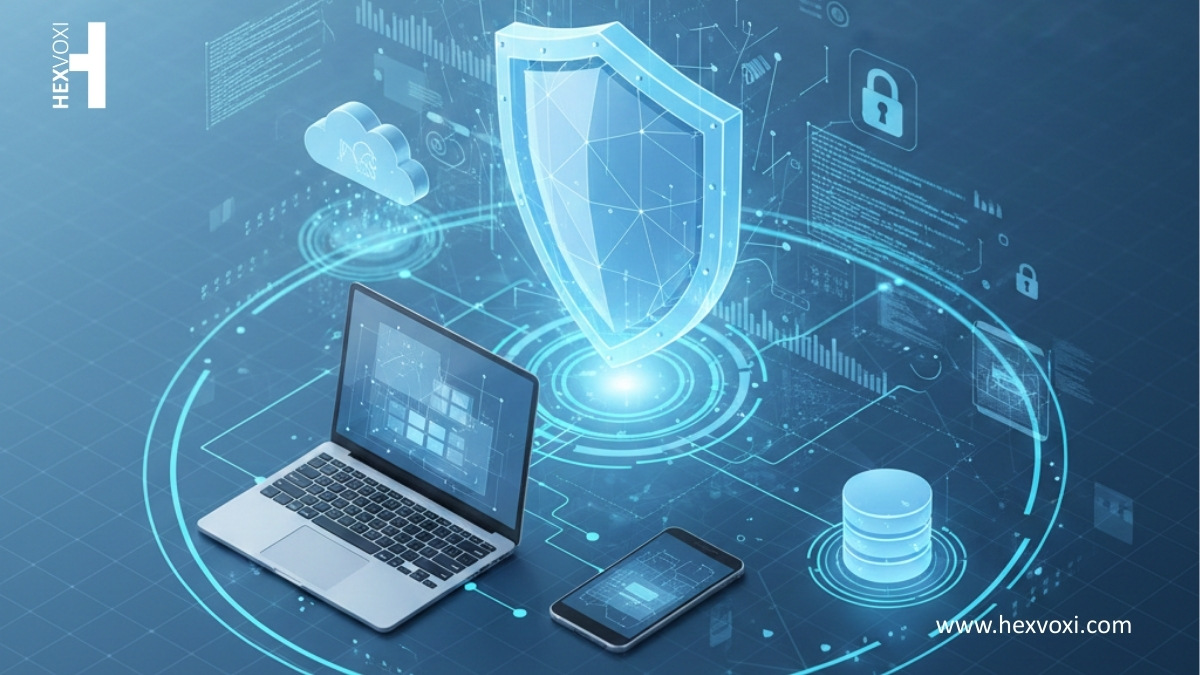
Cybersecurity protects digital assets, while traditional security protects physical property.
Key differences include:
- Speed and scale – Cyberattacks happen quickly and can affect millions at once.
- Threat sources – Cyber threats can come from anywhere in the world.
- Detection methods – Cybersecurity relies on automated tools and monitoring systems.
- Jurisdiction challenges – Cybercrime often crosses international borders.
- Recovery – Cyber incidents require restoring data and systems, not just replacing physical items.
Unlike traditional security that protects fixed locations, cybersecurity focuses on securing constantly changing and connected digital environments.
Critical Cyber Threats Faced by Businesses in 2026

Cyber threats in 2026 are faster, smarter, and more destructive
Advanced Ransomware Attacks Targeting Businesses
In 2026, ransomware attacks are more sophisticated and damaging. Attackers infiltrate networks, steal sensitive data, and encrypt files, demanding ransoms that can exceed $50 million. They also target backups and cloud storage, hindering recovery.
Critically, these groups now precisely target operational technology (OT) systems, disrupting manufacturing, hospitals, and power grids, forcing organizations into massive payments or extended shutdowns.
AI-powered social engineering and deepfake scams
AI has revolutionized cybercriminal social engineering. Highly sophisticated deepfake and voice cloning now allow attackers to convincingly impersonate CEOs or IT staff, bypassing traditional security training. Attackers also use AI to analyze our digital footprint social media, corporate data to create hyper-personalized phishing campaigns at scale. In several instances, AI chatbots have engaged employees in extended, trust-building conversations before soliciting sensitive data or system access.
Supply chain vulnerabilities exposing entire networks
Our interconnected ecosystem creates cascading security risks from third-party software, cloud services, and hardware, as we inherit their vulnerabilities. A single flaw in a widely-used library can compromise thousands of organizations.
We are highly concerned about attackers targeting vendor software build pipelines, development environments, and distribution systems. By embedding malicious code into legitimate software updates, cybercriminals gain access to every installing organization.
The challenge intensifies with our growing reliance on managed service providers and cloud platforms. We must trust these partners with our data and systems, yet we often have limited visibility into their security practices or incident response capabilities.
IoT device breaches compromising smart infrastructure
The explosion of connected devices in our work environments creates an enormous attack surface that’s difficult to monitor and secure. We’re dealing with smart thermostats, security cameras, printers, and industrial sensors that often ship with default passwords and rarely receive security updates. These devices become entry points for attackers looking to establish network footholds.
Critical infrastructure faces particular risks as operational technology merges with information technology networks. We’ve observed attacks targeting smart city systems, transportation networks, and utility grids through compromised IoT devices. The potential for physical harm and societal disruption makes these threats especially concerning.
Many IoT devices lack basic security features like encryption, authentication, or logging capabilities. When we deploy thousands of these devices across our operations, we create blind spots where malicious activity can persist undetected for months.
Quantum computing threats to current encryption methods
Quantum computers pose a risk to current digital encryption, which could be broken within the decade. Adversaries are already collecting encrypted data (“harvest now, decrypt later”) in anticipation. An immediate shift to quantum-resistant encryption is essential, despite the challenge of updating the entire security infrastructure (VPNs, certificates, databases, etc.) while maintaining performance.
Financial Impact of Cyber Attacks on Businesses
Direct Costs of Data Breaches and System Downtime
Cyberattacks inflict immediate financial damage, with the average data breach costing $4.88 million in 2024-a figure that is rising. Direct costs include hiring experts, forensic investigation, system restoration, data recovery, and emergency IT support.
System downtime is a major resource drain, causing significant revenue loss; manufacturing can lose $50,000 per hour. Further expenses include IT overtime and temporary equipment rentals.
Often overlooked are hidden costs such as increased insurance premiums, legal fees, customer notification costs, and credit monitoring, which collectively strain budgets long after the attack.
Long-term Reputation Damage Affecting Customer Trust
A data breach can instantly destroy years of built-up customer trust and brand reputation. Recovering from major security incidents is extremely difficult, often leading to reduced sales and market share loss.
The damage extends beyond current customers. Prospective clients, partners, and investors will question our security, amplified by social media turning incidents into viral crises.
Crucially, younger consumers are less tolerant of breaches, actively researching a company’s cybersecurity history and quickly switching to more secure competitors. To stay competitive, cybersecurity must be an absolute priority, not an afterthought, reflecting this shift in consumer behavior.
Regulatory Fines and Compliance Penalties
Governments globally are imposing severe cybersecurity penalties, with fines threatening business survival. For example, GDPR allows fines up to 4% of global annual revenue. These are no longer just a “cost of doing business,” but a bankruptcy risk.
The complex, evolving compliance landscape, including HIPAA, PCI DSS, and SOX, makes staying current difficult. Non-compliance often leads to escalating financial penalties.
Beyond fines, we face damaging operational restrictions. Regulators can suspend licenses, ban market access, or mandate costly third-party audits, disrupting operations and adding costs well beyond the initial penalty.
Lost Productivity and Operational Disruptions
Cyberattacks cripple organizations beyond IT, halting operations and paralyzing the workforce. Denied system access leads to zero productivity, causing manufacturing shutdowns, inability to process retail transactions, and service rejections.
Recovery is protracted, often lasting weeks or months, during which teams operate at reduced capacity while systems are rebuilt and secured. Significant time is lost to resets, retraining, and workflow adjustments. Sales, accounting, and customer service lose vital tools, struggling with data, invoices, and frustrated customers.
Productivity loss is worsened by supply chain disruptions, as outages impair communication, inventory tracking, and delivery, creating a compounding “domino effect” that damages customer and partner relationships. The total cost of lost productivity often far exceeds initial forecasts, with long-term organizational impact.
Personal Privacy Protection in the Digital Age
Safeguarding Sensitive Personal Information from Identity Theft
Our constant use of digital channels creates a valuable digital footprint including SSNs and addresses—that cybercriminals actively seek. Identity thieves use sophisticated tactics like security breaches, fraudulent websites, and phishing to collect this data. With it, they can open new credit accounts, file false tax returns, or secure loans in our names.
Protecting this personal information is vital. We must use unique, strong passwords, enable two-factor authentication, and be cautious about online sharing. Regularly checking credit reports for unauthorized activity and considering a credit freeze are essential safeguards.
Protecting Financial Data and Online Banking Security
The shift to digital banking increases the risk of financial security breaches, as more digital access points create potential vulnerabilities.
Banking trojans and malware target financial data stored on shopping sites to steal credentials and transaction codes, and can secretly siphon funds while displaying a manipulated balance. SIM swapping attacks also allow criminals to bypass security by hijacking a user’s phone number.
To combat these threats, essential security practices include using dedicated devices/browsers for banking, avoiding public Wi-Fi for transactions, setting up and monitoring transaction alerts, regularly reviewing statements, immediately reporting suspicious activity, and using virtual card numbers for online shopping.
Securing Smart Home Devices and Personal IoT Networks
Our homes now feature interconnected smart devices, offering convenience but also new targets for cyber threats. Many IoT devices have weak default security, making them vulnerable. Hackers can exploit these to spy, access home networks, or launch larger attacks, as seen with compromised baby monitors and smart locks.
To secure them, users must immediately change default passwords, update firmware, consider network segmentation, and be mindful of data collection. Disabling unused features like always-on microphones or cameras also enhances protection.
Maintaining Privacy on Social Media Platforms
Social media platforms extensively track user activity beyond what is actively shared, building detailed profiles on interests and behaviors. This comprehensive data map creates security risks, as criminals use it for targeted scams and the exposure of location data can lead to physical threats.
Users can regain privacy by auditing settings, limiting public information, restricting third-party app permissions, and carefully managing connection requests to prevent malicious data gathering.
Building Effective Cybersecurity Strategies
Implementing Multi-layered Defense Systems
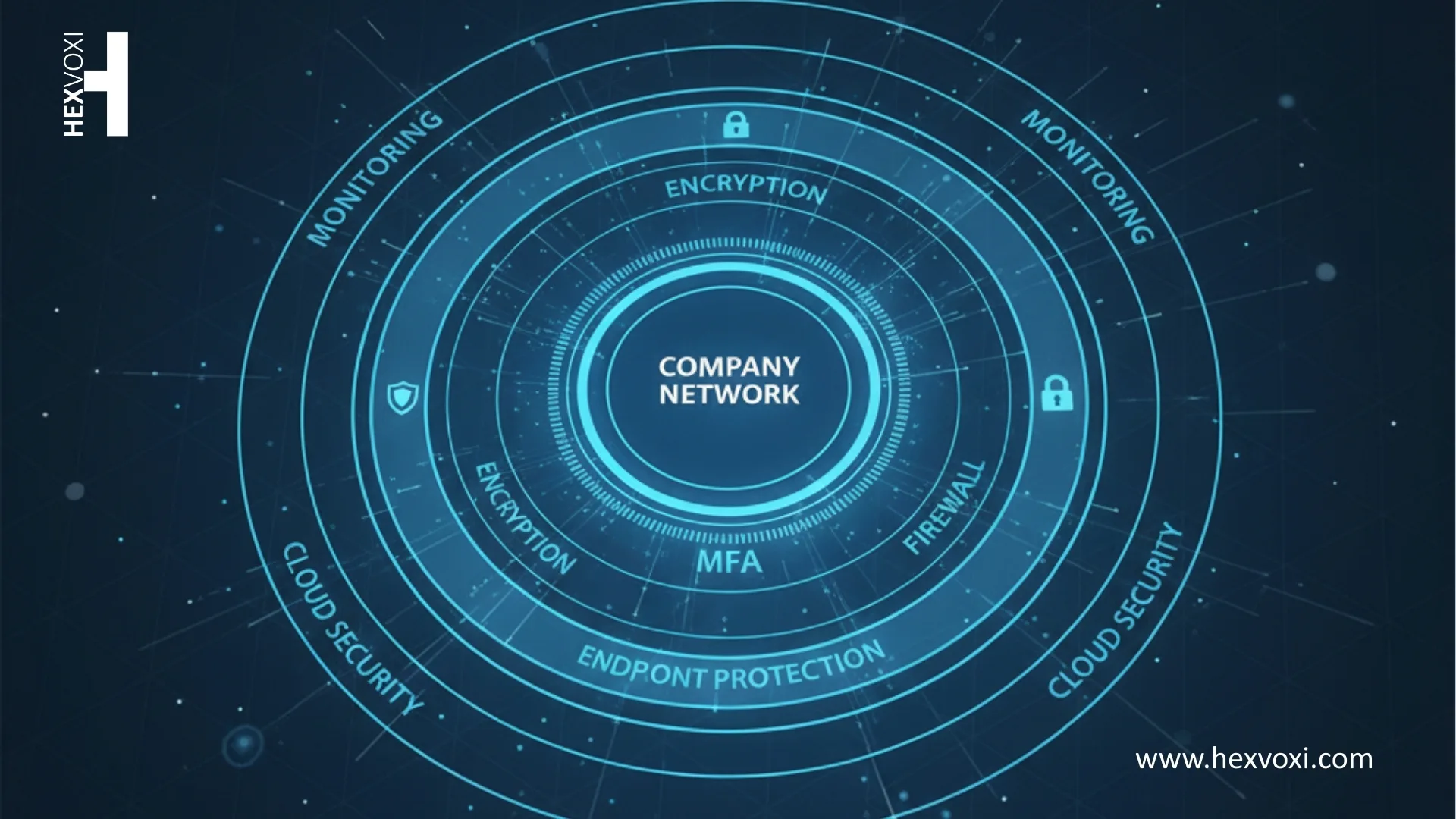
A robust cybersecurity defense uses multiple layers: network security (firewalls/IDS), endpoint protection, advanced email filtering (to combat phishing), cloud security, and a zero-trust architecture that verifies every user and device access.
| Network Security | Traffic monitoring and filtering | Firewalls, IDS/IPS |
| Endpoint Protection | Device-level threat detection | Antivirus, EDR solutions |
| Email Security | Phishing and malware prevention | Advanced filtering, sandboxing |
| Cloud Security | Data and application protection | CASB, cloud access controls |
| Identity Management | User verification and access control | Multi-factor authentication, SSO |
Employee Training Programs for Security Awareness
Our people are our greatest asset but also our biggest vulnerability; human errors like clicking bad links or sharing passwords bypass technical defenses.
Our interactive, real-world simulations teach employees how to identify phishing, handle social engineering, and report issues, replacing boring presentations.
Monthly security briefings are conversational, covering emerging threats and incident stories to stress the why of security.
Quarterly, non-punitive phishing simulations test awareness; failures are learning opportunities. We track improvement and celebrate consistent security awareness.
Password management training focuses on practical strategies like password managers and secure authentication. We also cover mobile, social media, and safe browsing for both work and personal use.
New hires receive dedicated security training in their first week, immediately establishing their role in organizational protection.
Regular Security Audits and Vulnerability Assessments
We cannot protect unknown assets. Regular security audits are essential to find blind spots and weaknesses before attackers do.
Our quarterly internal audits check access controls, user permissions, and software updates across all systems, often identifying accounts that should be disabled. Annually, we hire third-party security firms for comprehensive penetration testing to find external vulnerabilities. Continuous network vulnerability scans automatically detect flaws; we prioritize patching based on risk.
We also assess physical security, including locks and visitor procedures, and conduct social engineering tests.
All audit findings result in action plans with specific timelines and assigned responsibility. We track progress monthly and report to leadership to ensure accountability and improvement.
Incident Response Planning and Recovery Procedures
Because security incidents are inevitable, we require clear, pre-planned procedures to respond quickly and effectively, preventing panic.
Hexvoxi LLP Incident Response Team includes IT, Legal, Communications, and Senior Management. All members know their roles and maintain updated, offline contact channels for out-of-hours coordination.
We classify incidents by severity, triggering specific response and escalation procedures. Regular tabletop exercises simulate real attack scenarios to practice these plans.
Detailed documentation is vital; we record every action, evidence collected, and decision made for legal compliance, post-incident analysis, and process improvement.
Recovery focuses on safely restoring critical business operations. We maintain tested, offline data/system backups and plan for extended periods of limited technology use.
Within 48 hours of resolution, a post-incident review identifies successes, areas for improvement, and necessary changes to prevent future incidents, directly influencing policy and training updates. Cybersecurity is now the essential backbone of the digital world, protecting against increasingly sophisticated threats like major data breaches. In 2026, building robust defenses is mandatory for survival. We must prioritize security strategies, stay informed, and act now in both personal and organizational contexts. Prevention is always cheaper than recovery.
Conclusion
Cybersecurity has become the backbone of our digital world, protecting everything from personal bank accounts to massive corporate networks. As cyber threats continue to evolve into more sophisticated and costly attacks, the risks grow higher for individuals and businesses alike. In 2026, relying on digital systems means making security a top priority, not an afterthought.
Building strong cybersecurity defenses is no longer optional — it is essential for survival. Organizations must implement robust security strategies, stay informed about emerging threats, and adopt proactive protection measures to prevent costly disruptions. The cost of prevention will always be far less than the price of recovery after an attack.
At Hexvoxi, a leading cybersecurity company in Kerala, we provide advanced cybersecurity solutions designed to protect businesses from modern digital threats. From risk assessment and threat monitoring to multi-layered defense implementation, our mission is to help organizations stay secure, resilient, and prepared for the future.